Autologous NK Cell Culture & Laboratory Preparation
At Firstcell Malaysia, our autologous Natural Killer (NK) Cell program begins with the patient's own blood, from which the relevant immune cells are obtained for laboratory preparation.
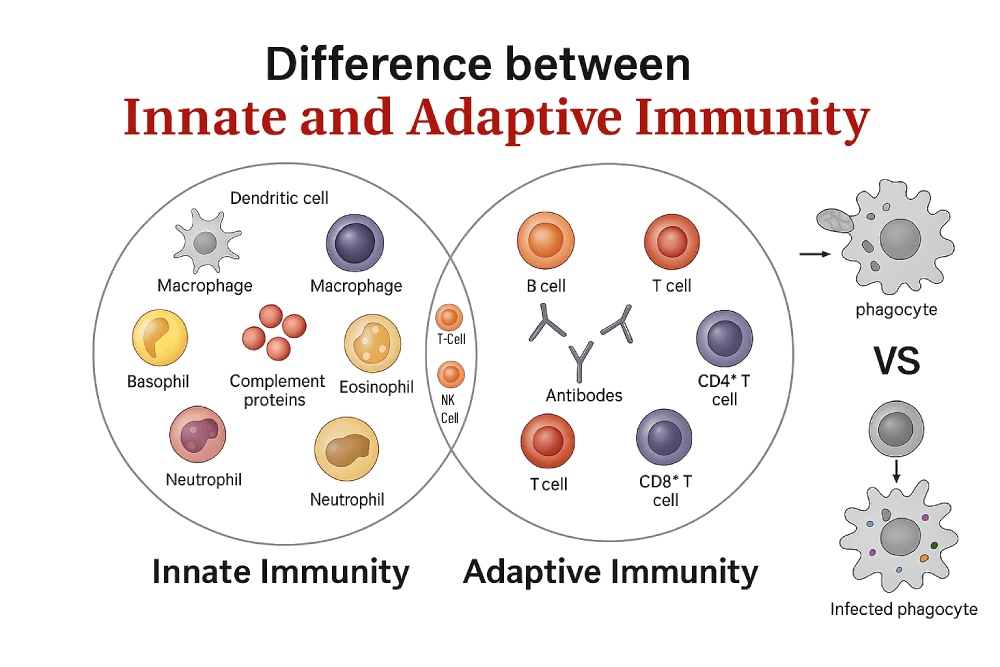
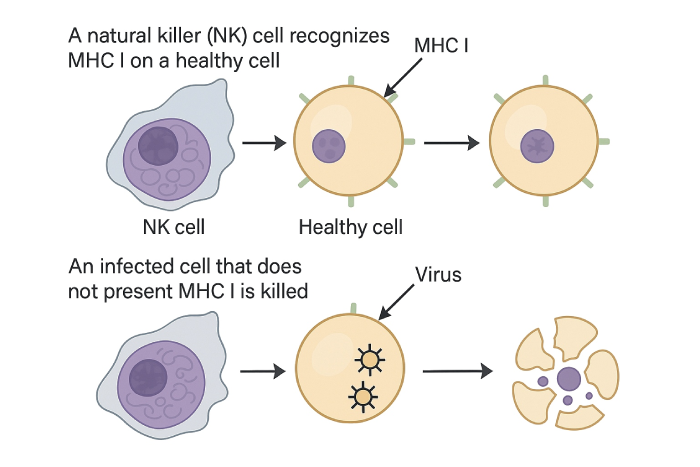
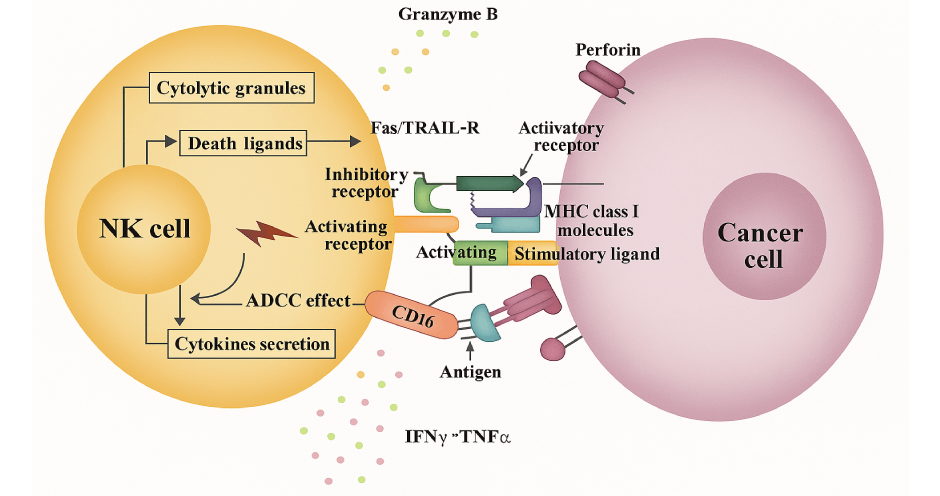
Natural Killer (NK) cells are an important component of the body's innate immune system and play a role in immune surveillance and the recognition of certain abnormal or infected cells.
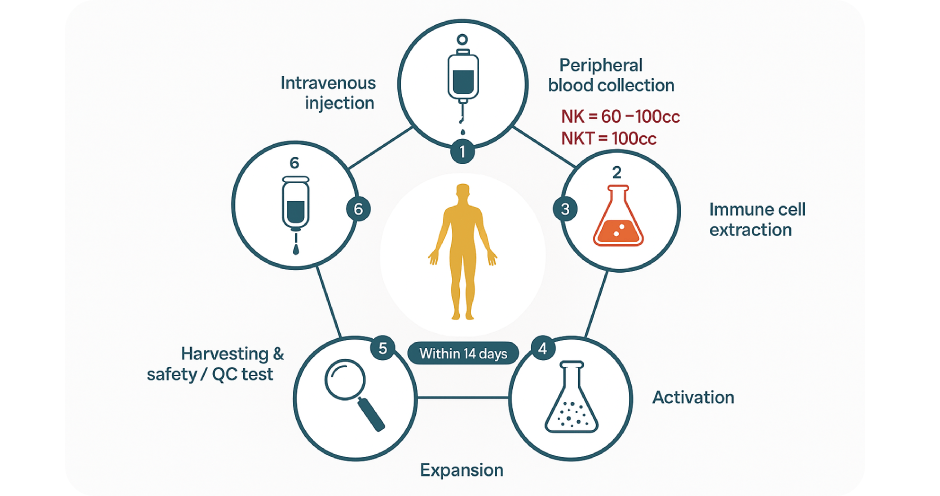
Through a controlled laboratory process, the patient's immune cells are isolated, activated and expanded to achieve the required NK cell quantity. Following appropriate quality-control assessment, the final preparation is released for administration back to the same patient.
1. Patient Assessment & Blood Collection
The process begins with an assessment by the Firstcell medical team to determine the patient's suitability and treatment requirements.
The patient's blood is then collected according to the clinical and laboratory protocol. As this is an autologous process, the patient's own blood serves as the starting source for the NK cell preparation.
2. Immune Cell Isolation
The collected blood is transferred for laboratory processing under appropriate controlled conditions.
The relevant immune-cell population is separated from the blood and prepared as the starting material for subsequent NK cell activation and expansion.
3. NK Cell Activation
The selected immune cells are placed into a controlled culture environment designed to support NK cell activation and growth.
This prepares the NK cell population for further expansion according to the laboratory's established and validated procedures.
4. Controlled NK Cell Expansion
The activated NK cells are cultured and expanded under carefully controlled laboratory conditions.
During the culture period, the NK cell population increases substantially, allowing the laboratory to achieve the target quantity required for the patient's Firstcell treatment protocol.
5. NK Cell Harvesting
Once the intended expansion and laboratory requirements have been achieved, the expanded NK cells are harvested.
The cells are then processed and formulated into the required final preparation according to established laboratory procedures.
6. Quality Control & Release Assessment
Quality control is an important part of the Firstcell NK Cell treatment journey.
Before the preparation is released for clinical use, appropriate laboratory assessments are performed. Depending on the laboratory's validated procedures, these may include:
-
Cell identity and composition
-
Total viable cell count
-
Cell viability
-
NK cell characteristics
-
Microbiological sterility
-
Relevant contamination testing
-
Functional or activity assessment, where applicable
-
Other laboratory-defined release criteria
Only preparations that meet the laboratory's required release specifications should proceed for clinical administration.
7. Preparation of the Required NK Cell Quantity
Following successful quality assessment, the expanded NK cells are prepared according to the prescribed treatment quantity.
Depending on the patient's individual treatment plan and applicable laboratory specifications, the final preparation may contain a target quantity measured in billions of NK cells.
8. Administration at Firstcell Malaysia
Following laboratory release, the NK cell preparation is handled and transported under appropriate controlled conditions.
The expanded autologous NK cells are then administered back to the same patient from whom the original blood was collected, under the supervision of the Firstcell medical team and according to the prescribed treatment protocol.
The Firstcell Autologous NK Cell Journey
Medical Assessment → Patient's Own Blood Collection → Immune Cell Isolation → NK Cell Activation → Controlled Expansion → Harvesting → Quality Control → Final Preparation → Administration Back to the Patient
Your Own Cells. Professionally Prepared.
The key characteristic of an autologous NK cell program is that the starting immune cells originate from the patient's own blood, eliminating the need for a separate donor as the source of the NK cells.
At Firstcell Malaysia, the clinical and laboratory journey is coordinated with a focus on appropriate patient assessment, controlled cell preparation, quality evaluation and professional medical care.
From initial consultation through cell preparation and administration, each stage follows the applicable clinical and laboratory protocols to support the identity, viability, quality and microbiological safety of the final NK cell preparation.